How to know when a pattern is helping -and when it’s hurting
By Manaswini De • Software Engineer & Instructor at CodeKerdos
“Any fool can write code that a computer can understand. Good programmers write code that humans can understand.” -Martin Fowler
If you have been coding for a while, you have probably heard of design patterns. Maybe you learned about the Gang of Four book, or had a senior engineer enthusiastically introduce you to the Observer, Factory, or Strategy pattern. And yes -these patterns are genuinely powerful. But here’s a question that doesn’t get asked enough:
What happens when we use them too much?
In this blog, we’ll explore the line between smart software design and overengineering -and how to tell the difference. We’ll look at real examples, red flags to watch out for, and practical rules to keep your code clean, readable, and maintainable.
What Are Design Patterns?
Design patterns are reusable solutions to commonly occurring problems in software design. They’re not code snippets you copy-paste -they’re templates for thinking about a problem. The famous Gang of Four (GoF) book catalogued 23 such patterns, grouped into three families:
- Creational patterns – How objects are created (e.g., Singleton, Factory, Builder)
- Structural patterns – How classes and objects are composed (e.g., Adapter, Decorator, Facade)
- Behavioral patterns – How objects communicate (e.g., Observer, Strategy, Command)
When applied at the right time, these patterns reduce duplication, improve readability, and make future changes much easier. The keyword here: at the right time.
The Problem with Patterns
Here’s the irony: the very qualities that make design patterns useful -abstraction, indirection, flexibility -are also what makes them dangerous when misapplied.
Overengineering happens when a solution is more complex than the problem requires. It’s when you pull out a heavy-duty pattern for a problem that needed two lines of straightforward code.
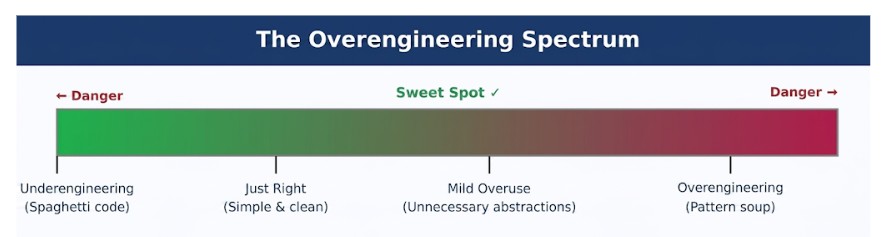
Figure 1: The Overengineering Spectrum -from underengineering to pattern soup
The sweet spot is “just right”: code that is simple, clear, and extensible without unnecessary layers of abstraction. The farther you move in either direction , the harder the codebase becomes to reason about.
💡 A Common Trap
Many developers use patterns not because they solve a real problem, but because they want to signal sophistication. Ask yourself: “Who benefits from this abstraction -the code, or my ego?”
A Classic Example: Sending a Notification
Let’s imagine a very simple task: your app needs to send an email notification when a user registers. Here’s how the journey from clean code to overengineered chaos can happen.
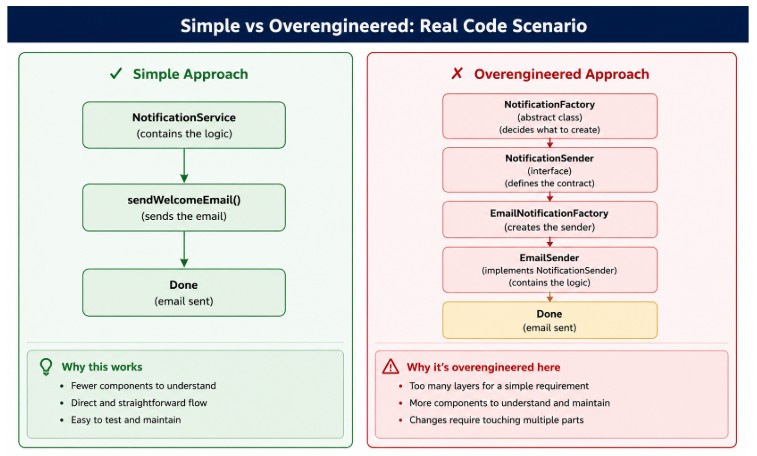
Figure 2: Simple vs Overengineered approaches to the same problem
The simple approach calls sendEmail() and is done. Three lines. Clear intent.
What This Looks Like in Real Code
Let’s compare how both approaches might look in an actual codebase.
✅ Simple Approach
public class NotificationService {

    public void sendWelcomeEmail(String email) {
        System.out.println("Sending welcome email to " + email);
    }
}
Usage:
NotificationService service = new NotificationService();
service.sendWelcomeEmail("user@example.com");
❌ Overengineered Approach
interface NotificationSender {
    void send(String message);
}
class EmailSender implements NotificationSender {

    @Override
    public void send(String message) {
        System.out.println("Sending email: " + message);
    }
}
abstract class NotificationFactory {
    abstract NotificationSender createSender();
}
class EmailNotificationFactory extends NotificationFactory {

    @Override
    NotificationSender createSender() {
        return new EmailSender();
    }
}
Usage:
NotificationFactory factory = new EmailNotificationFactory();
NotificationSender sender = factory.createSender();

sender.send("Welcome user!");
The second approach is not “wrong” -in fact, patterns like Factory can be incredibly useful in large systems with multiple notification channels.
But for a requirement that only sends one email, the added abstractions increase cognitive load without providing meaningful value.
The problem isn’t the pattern itself -it’s introducing flexibility before the system actually needs it.
Even in this simplified example, the overengineered version introduces multiple abstractions -factories, interfaces, and layered object creation -for a problem that barely needs them. Every individual piece might seem justified on its own, but together they create a maze that a new developer would spend hours navigating -just to find where the email actually gets sent.
Worse, when requirements change (say, you want to add SMS), the overengineered version now requires modifications across six files instead of one.
💡 Premature Generalization
Building for hypothetical future requirements is one of the biggest sources of overengineering. Code today’s requirements cleanly, and refactor when real new requirements arrive.
How to Know When to Use a Pattern
The decision to introduce a pattern should always come from the problem, not from the developer’s pattern vocabulary. Here is a practical flowchart to guide that decision:
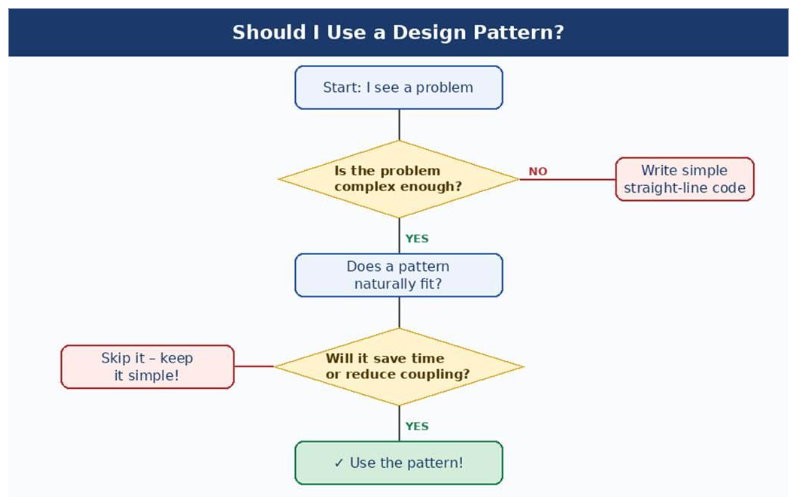
Figure 3: Decision flowchart for using a design pattern
The key questions to ask yourself before introducing any pattern:
- Is the problem actually complex enough to warrant a pattern?
- Would the pattern make this code easier to read and change -or harder?
- Can a teammate who doesn’t know this pattern understand what’s happening?
- Are you solving a real problem today, or a hypothetical one tomorrow?
If the honest answer to any of these points toward simplicity, choose simplicity. YAGNI -You Aren’t Gonna Need It -is one of the most underrated principles in software engineering.
Red Flags to Watch For
Overengineering is subtle. It often feels like good engineering at the moment. But here are six warning signs that you may have crossed the line:
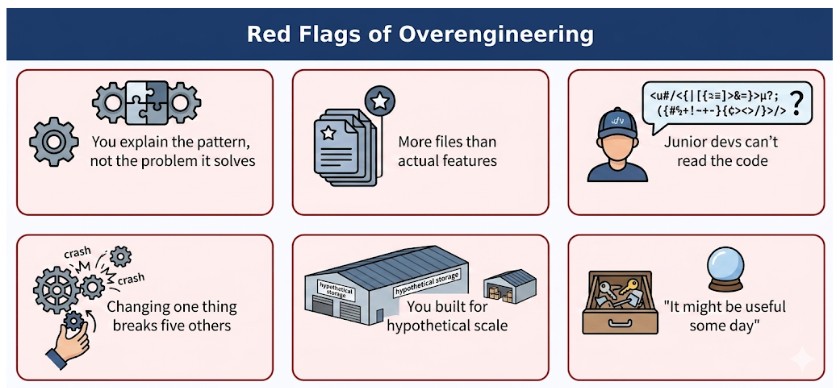
Figure 4: Six red flags that signal overengineering in your codebase
Let’s explore each red flag in a bit more detail:
1. You explain the pattern, not the problem it solves
If in a code review you catch yourself saying “I used the Abstract Factory here” without being able to explain the concrete business problem it addressed, that’s a warning sign.
2. More files than features
A utility script that has 14 classes, 3 abstract interfaces, and 2 base classes -and does one thing -is not well-designed. It’s over-abstracted.
3. Junior devs can’t read the code
Clarity is a feature. If a competent junior developer cannot read your code and understand what it does, the code has failed -not the developer.
4. Changing one thing breaks five others
One of the goals of design patterns is decoupling. If your layered, pattern-heavy architecture still creates tight coupling under the hood, you got the worst of both worlds.
5. You built for hypothetical scale
Designing for millions of users when you have 50 is a classic overengineering trap. Get the product working first, then scale when you actually need to.
6. "It might be useful someday"
If this phrase appears in your reasoning, stop. Build what is needed now. Refactor later with actual context.
Practical Rules to Stay in the Sweet Spot
Here are some principles that will help you use patterns effectively without falling into overengineering:
- Start with the simplest thing that works. Patterns are refactoring destinations, not starting points.
- Let patterns emerge from duplication, not anticipation. The Rule of Three: refactor into a pattern only when you see the same structure three times.
- Favour composition over inheritance. Many overengineered solutions abuse class hierarchies that should be simple function calls.
- Write code for your team, not for yourself. The measure of good code isn’t how clever it is -it’s how quickly someone else can understand it.
- Conduct regular simplicity audits. Every few sprints, ask: “What can we remove?” Complexity tends to accumulate silently.
💡 The Golden Test
Show your implementation to a teammate without explanation. If they need more than two minutes to understand what it does, simplify it.
Real-World Context: When Patterns DO Make Sense
To be fair to patterns -there are scenarios where they absolutely shine:
- Observer pattern: Perfect for event-driven systems like UI frameworks, real-time notifications, or pub-sub messaging.
- Strategy pattern: Excellent when you have multiple interchangeable algorithms (sorting, pricing rules, payment methods).
- Factory pattern: Valuable when object creation logic is complex or needs to be centralized for testing.
- Decorator pattern: Ideal for adding responsibilities to objects dynamically -like middleware in web frameworks.
The difference between good use and overuse is context. A pattern is good engineering when it makes the codebase easier to work with for the team. It is overengineering when it serves the pattern’s structure more than the problem.
Conclusion
Design patterns are tools, not trophies. They exist to make your code easier to write, read, and maintain -not to demonstrate your knowledge of GoF or to future-proof a problem that may never materialize.
The best engineers I know share a common habit: they reach for complexity only when simplicity can no longer serve them. They let the problem drive the pattern, not the other way around.
So the next time you feel the urge to add an Abstract Factory or a Chain of Responsibility, pause and ask: “Is this solving a real problem, or am I just engineering for the joy of it?” Both have their place -but only one belongs in production code.
“Simplicity is the soul of efficiency.” -Austin Freeman